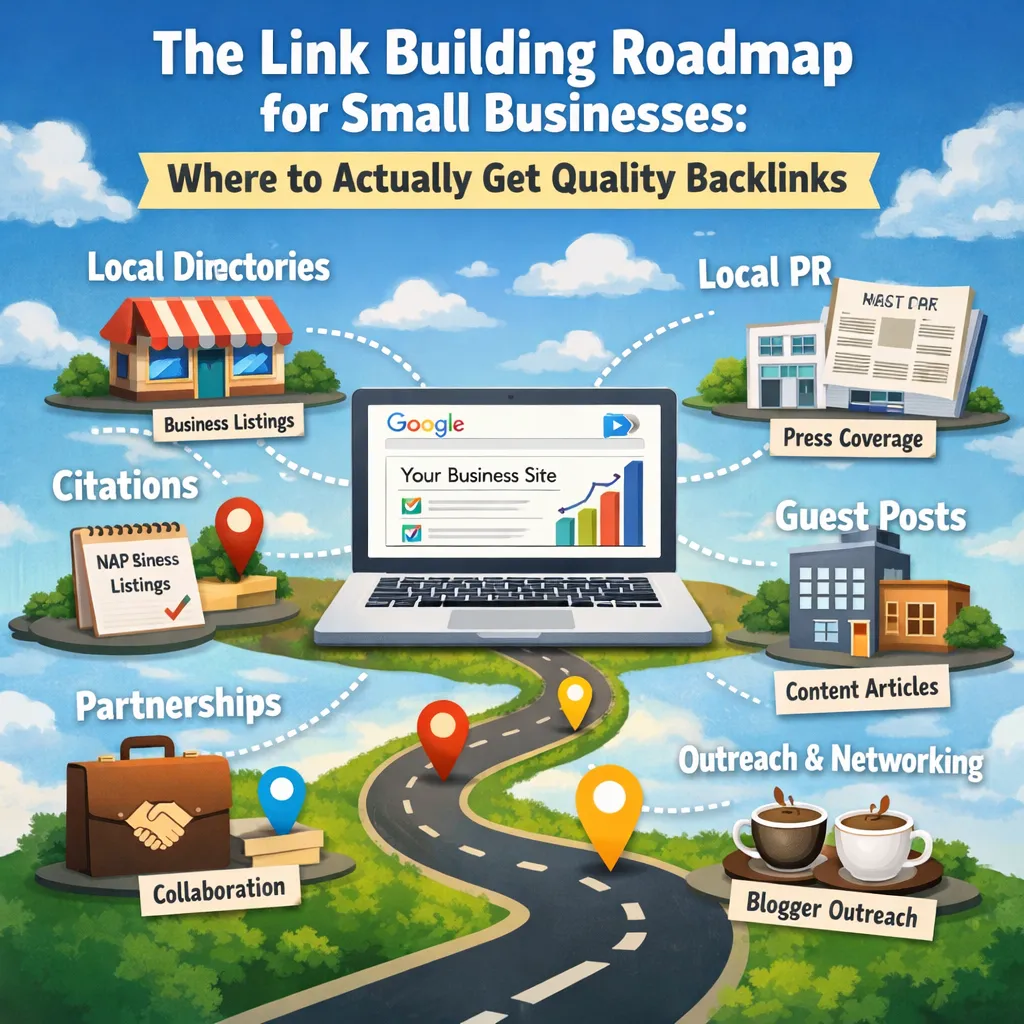
The Link Building Roadmap for Small Businesses: Where to Actually Get Quality Backlinks
If you've done even a tiny bit of reading about SEO, you've heard the phrase "backlinks are important."
You probably know they matter. But here's what you might not know: not all backlinks are created equal. Getting 100 links from dodgy websites does about as much for your SEO as eating 100 biscuits does for your health—it feels good at the time, but the results aren't pretty.
The good news? You don't need to be a big corporation with unlimited PR budgets to get quality backlinks. In fact, some of the best links come from local connections, genuine relationships, and content that's actually useful.
In this post, I'm going to walk you through exactly where small businesses can get legitimate, high-quality backlinks that Google actually cares about. No jargon. No sketchy tactics. Just real strategies that work.
What Even Is a Backlink? (The Quick Version)
A backlink is simply a link from another website pointing to yours. Think of it like a recommendation. If a trusted local business mentions your site on theirs, that's a backlink. If a blogger links to your article, that's a backlink. Google sees these links as votes of confidence—"This site is worth checking out."
The catch? Google is smart. It knows the difference between a genuine recommendation and someone just throwing random links everywhere. One quality backlink from a trusted, relevant site is worth 100 spammy links from dodgy forums.
Why Should Small Businesses Care About Backlinks?
Here's the bottom line: backlinks are one of Google's top ranking factors. If two websites have similar content, similar structure, and similar keywords, the one with more quality backlinks will almost always rank higher.
For a small business, backlinks do three things:
Boost Your Authority – Google sees links as trust signals. More links = more credibility.
Improve Rankings – Websites with quality backlinks rank higher for competitive keywords.
Drive Referral Traffic – People don't just click links to improve your SEO. They click because they're interested. That's potential customers landing on your site.
The problem? Most small business owners have no idea where to start. They think link building is something only big agencies do. Spoiler: it's not.
Where Small Businesses Actually Get Quality Backlinks
Let's get practical. Here are the real places where small businesses can earn legitimate backlinks—without paying sketchy agencies or compromising ethics.
1. Local Business Directories and Citations
This is the easiest starting point. Directories like Yell, FreeIndex, 192.com, and local chamber of commerce websites let you create a business profile—and most of them link back to your website.
How to do it:
Search for "[your town] business directory" or "[your industry] directory"
Create a profile on every legitimate directory relevant to your business
Make sure your business name, address, and phone number match exactly across all listings (this is called NAP consistency)
Include a link back to your website where allowed
Pro tip: Don't just create the profile and forget it. Update it regularly, add photos, and respond to reviews. Google notices when you're actively managing your listings.
Why it works: Local directories are trusted by Google. They're especially powerful for "near me" searches and local rankings.
2. Industry-Specific Directories and Association Sites
Most industries have their own directories. Plumbers have directories. Accountants have professional bodies. Builders have trade associations.
Examples:
Gas Safe Register (for heating engineers)
RIBA Chartered Architects (for architects)
Law Society Directory (for solicitors)
TripAdvisor (for hospitality)
Trustpilot (for many service industries)
How to do it:
Search "[your industry] directory UK" or "[your profession] directory"
Look for industry bodies and professional associations
Create profiles where relevant and link back to your site
Why it works: These sites are authoritative. A backlink from a well-respected industry directory tells Google "This business is legitimate and professional."
3. Local Partnerships and Mutual Links
One of the best (and most underused) link building strategies for small businesses is simply asking other local businesses if they'd link to you.
Real example: James runs a plumbing business in Bristol. He noticed a local bathroom showroom that regularly referred customers to him. He asked, "Would you be happy to link to us on your website? I'd be happy to link back to you too." They said yes. That one mutual link helped his site rank better because it came from a relevant, local, trusted source.
How to do it:
Think of businesses that complement yours (not competitors—partners)
A plumber might partner with a bathroom showroom
A baker might partner with a florist or wedding photographer
A web designer might partner with a digital marketing agency
Reach out (email or phone) and suggest a simple link swap
Make it easy for them by offering to write something about their business
Why it works: Local links signal to Google that you're part of your community. Plus, these partnerships often lead to referrals too.
4. Local Press and News Sites
Local newspapers and news websites are desperate for story ideas. If you've got a good story, they'll often link to your website.
What qualifies as a "good story"?
You're sponsoring a local event
You've hired new staff (especially if they're local or newsworthy)
You're running a charity initiative
You've won an award or been recognized
You're opening a new location
You're launching a service that solves a local problem
How to do it:
Contact your local newspaper's editor or news desk
Write a short press release (200-300 words)
Make it about them, not you. "Local Business Raises £5,000 for Foodbank" is better than "We're Amazing"
Include a link to your website (usually in the bio or relevant section)
Real example: Sarah runs a dog grooming business in Essex. She organized a charity grooming day for rescue dogs and contacted the local Essex Live. They ran a story, included her website link, and she got 50+ visitors from the article. Plus, two new regular customers.
Why it works: Local news sites have good authority. A link from a recognized local news source is worth more to Google than a link from a random blog.
5. Guest Posting and Blog Contributions
If you've got something useful to say, other websites might let you write for them—in exchange for a link back to your site.
How it works:
Identify blogs or websites that your ideal customers read
Find their "contribute" or "guest post" page
Pitch an article idea that's genuinely helpful (not just a sales pitch)
Write the article, include a link back to your site in your author bio
What NOT to do:
Don't write generic, unhelpful content just to get a link
Don't pitch irrelevant topics to irrelevant websites
Don't expect payment if the site has no audience
Real example: Tom is an accountant. He pitched an article to a small business networking website: "5 Tax Mistakes Small Businesses Make in January." The site published it, included his bio with a link to his website, and he got 10+ qualified leads from people reading the article.
Why it works: Guest posts work on two levels. You get a backlink, AND you get exposure to people who are actively reading (and interested in your niche).
6. Community and Charity Work
Sponsor a local event? Donate to a charity? Partner with a community group? They often link to their sponsors on their website.
How to do it:
Look for local events, charities, and community groups relevant to your business
Sponsor or donate (even small amounts count)
Make sure they list you on their website with a link
Bonus: You get the good feeling of helping your community
Real example: Lisa runs a fitness studio in Manchester. She sponsored a local 5K charity run. The event website listed her as a sponsor with a link back to her site. The event attracted 200 runners—several of whom became members.
Why it works: Charity and community sites are trusted. Plus, they often have decent traffic from engaged, local people.
7. Local Blogger Outreach
Local bloggers (whether they're writing about food, lifestyle, parenting, or their town) often have loyal, engaged audiences. If you can get them to link to you naturally, it's gold.
How to do it:
Find bloggers who write about your area or industry
Read their content (actually read it—don't just skim)
If they mention something you can help with, reach out genuinely
Offer to help, collaborate, or provide expert insight
Ask if they'd be willing to link to you
Real example: Mark runs a family-friendly restaurant in York. He found a parenting blogger who wrote about "Best Rainy Day Activities with Kids." He reached out, offered a discount for her readers, and asked if she'd mention his restaurant. She did—and linked to him. She brought 20+ families to the restaurant, several of whom became regulars.
Why it works: Bloggers have loyal followers. A recommendation from someone their audience trusts carries weight.
8. Resource Pages and "Best Of" Lists
Many websites have "best of" or resource pages. Plumber directories might have a "best plumbers in [town]" list. Wedding blogs have "best venues" lists.
How to do it:
Search "[your service] best in [your town]"
Search "[your industry] resource page"
Find websites that list businesses in your niche
Contact them and ask to be included
Many will add you if your business looks legitimate
Real example: Zara runs a wedding photography business in Devon. She searched "best wedding photographers Devon" and found a wedding planning website with a resource page. She contacted them, explained her approach, and asked to be listed. They added her with a link. Within a month, she'd had three enquiries from that link.
Why it works: Resource pages get traffic from people actively looking for services like yours.
The Link Building Strategy That Actually Works
Okay, so you've seen the eight places to get backlinks. But how do you approach this strategically instead of just randomly chasing every link?
Here's a simple roadmap:
Month 1: Build the Foundation
Get listed on 5-10 local directories relevant to your business
Claim any existing listings you've forgotten about
Make sure NAP is consistent everywhere
Month 2: Partnerships
Identify 5 complementary local businesses
Reach out with a genuine partnership or link-swap proposal
Aim for 2-3 new partnerships
Month 3: Press and Community
Write one press release about something newsworthy in your business
Identify one local charity or community group to sponsor or partner with
Aim for 1-2 new links from press or community
Months 4+: Ongoing
Guest post once a month on a relevant blog
Reach out to 1-2 local bloggers
Keep building community relationships
That's it. Not 100 links a month. Not a dodgy agency buying spammy links. Just consistent, genuine relationship-building that earns you real backlinks from real sources.
Common Link Building Mistakes (And How to Avoid Them)
Before we wrap up, let's talk about what NOT to do.
Mistake 1: Buying Links Don't buy backlinks from services that promise "500 links for £99." Google knows. Your site will get penalized. It's not worth it.
Mistake 2: Creating Useless Content Just to Get Links Thin, unhelpful content won't get links from anyone who matters. If you're going to guest post or create content, make it genuinely useful.
Mistake 3: Spamming Directories and Blogs Reaching out to 100 websites with a generic template isn't link building—it's spam. Personalize. Be genuine. Quality over quantity.
Mistake 4: Ignoring Relevance A backlink from a website about hamster breeding probably won't help your plumbing business rank better. Relevance matters.
Mistake 5: Expecting Overnight Results Link building takes time. You probably won't see massive ranking jumps after one link. But after 6-12 months of consistent effort? You'll notice the difference.
FAQ
Q: How many backlinks do I need to rank on page one of Google? A: It depends on your industry and competition. Some competitive keywords need dozens of quality links. Others need just a handful. The key is quality, not quantity. One link from a trusted, relevant site beats 10 spammy ones every time.
Q: How long does it take to see results from link building? A: Most businesses see ranking improvements within 2-3 months of consistent link building. However, really competitive keywords might take 6-12 months. Patience is key.
Q: Is it bad if I have a lot of backlinks from irrelevant websites? A: Not necessarily bad—Google just ignores them. However, if you have a lot of links from spammy or low-quality sites, it can hurt your rankings. Stick to quality sources.
Q: Can I pay someone to get backlinks for me? A: You can work with an ethical SEO agency that builds links through outreach and relationship-building (like we do). What you should avoid is buying links from sketchy services. There's a big difference between "paying someone to help you earn links" and "buying links."
Q: What's the difference between nofollow and dofollow links? A: Dofollow links pass ranking power to your site. Nofollow links don't. However, nofollow links can still drive traffic and build brand awareness, so they're not useless. Both matter.
Q: Do internal links count as backlinks? A: No. Backlinks are external—links from other websites to yours. Internal links (links between pages on your own site) are important for SEO, but they're different from backlinks.
Q: Is link building still important in 2025? A: Yes. It's actually more important than ever. As more businesses fight for rankings, quality backlinks remain one of the strongest ranking signals Google has.
Q: How do I know if a directory is worth being on? A: Look at the domain authority (you can check this with free tools like Ubersuggest or Moz). If it's a trusted, established directory that Google recognizes, it's worth your time. If it looks sketchy or abandoned, skip it.
Q: Should I reach out to blogs and websites about links? A: Absolutely. Most website owners are open to genuine partnerships and relevant links. The key is being personable and offering something valuable (not just asking for a link).
Ready to Build Your Link Building Strategy?
Look, link building doesn't have to be complicated or sketchy. It's about building genuine relationships with other businesses and websites in your community.
But if you're feeling a bit overwhelmed—or just want someone to handle this while you focus on running your business—we can help.
We've built link strategies for dozens of small UK businesses across Essex, Kent, and beyond. We handle the outreach, the relationship building, and the tracking. All you do is watch your rankings improve.
Want to chat about a link building strategy for your business? Let's talk.
No sales pitch. No jargon. Just a genuine conversation about what your business needs and how we can help.
You can also get in touch directly if you'd prefer to chat by phone or email.
Kevin is the founder of 99 Quid Websites where you can get a professional website for your business for 99 quid. A deal that's better than it says it is?