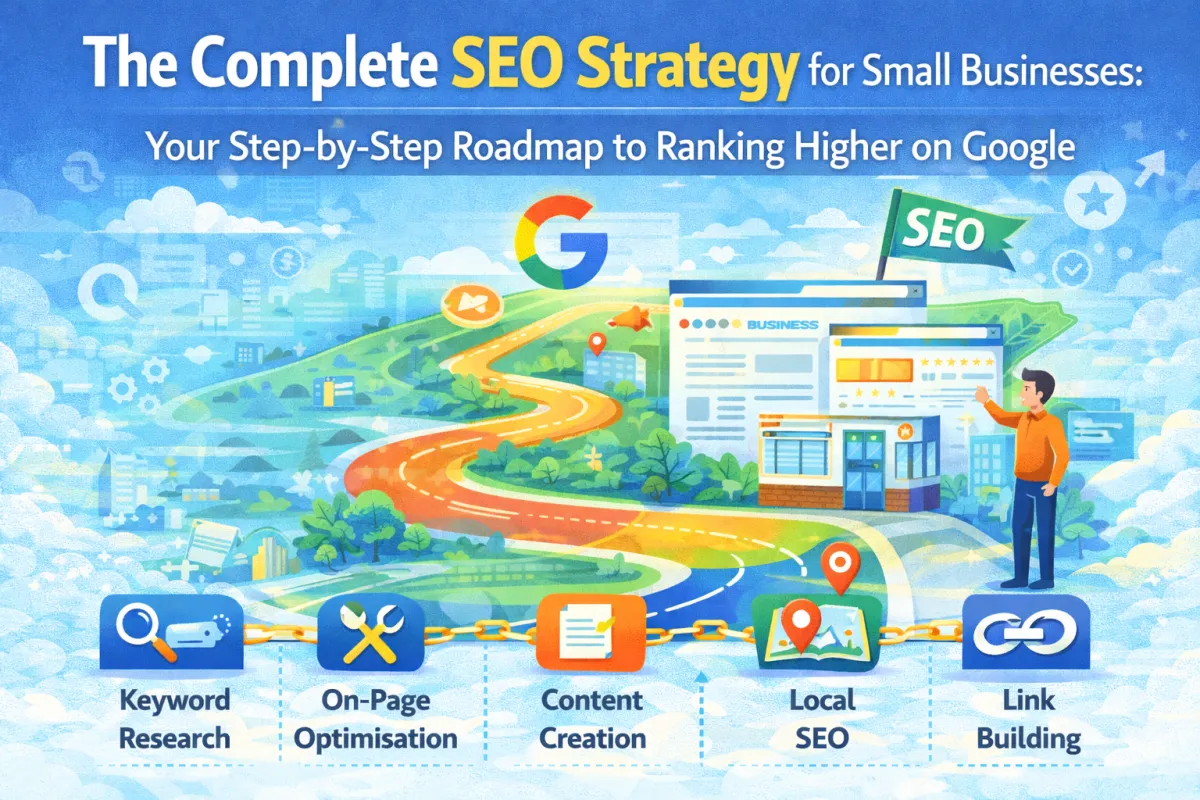
The Complete SEO Strategy for Small Businesses: Your Step-by-Step Roadmap to Ranking Higher on Google
Here's the reality about SEO that most small business owners don't understand:
It's not one thing. It's not about getting backlinks. It's not about page speed. It's not about keywords.
SEO is all of these things working together as a system.
Most businesses pick one tactic and obsess over it. "We need backlinks!" So they spend all their time on link building and ignore everything else. Or they focus on rankings and forget about conversions. They do one thing well and wonder why the other nine things aren't working.
The businesses that truly dominate on Google? They don't focus on individual tactics. They build a complete SEO system where every element supports the others.
In this post, I'm going to show you that complete system. We'll walk through nine essential elements of SEO, in the order you should actually implement them. By the end, you'll have a clear roadmap to rank higher on Google, drive more traffic, and convert more visitors into customers.
The Nine Elements of a Complete SEO Strategy
Let's lay out the full picture. Here's what a complete SEO strategy looks like:
Element 1: Build Trust and Authority First (E-E-A-T)
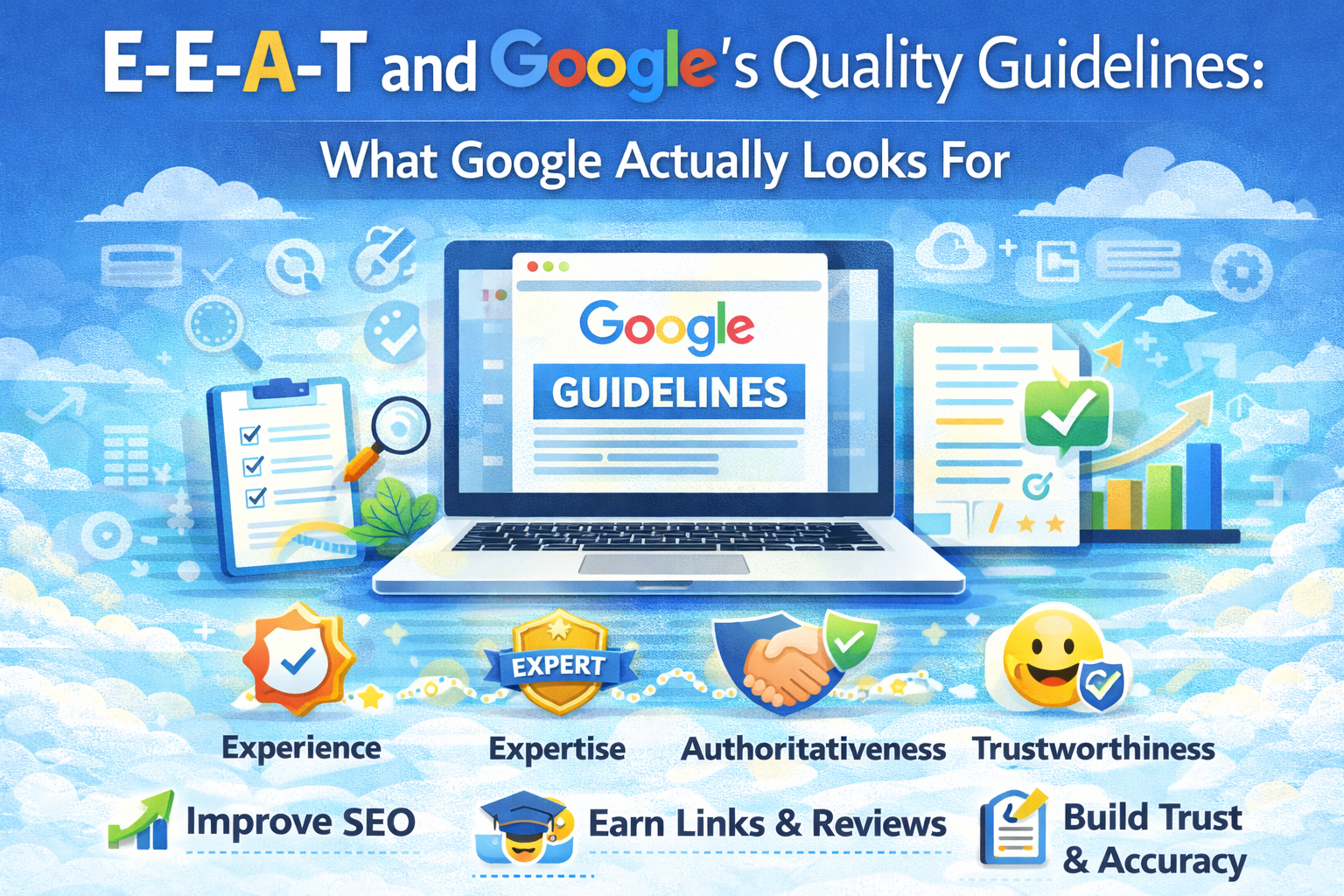
Before you do anything else, you need to establish that you're trustworthy and knowledgeable.
Why? Because Google's algorithm now heavily prioritizes E-E-A-T: Experience, Expertise, Authoritativeness, and Trustworthiness.
You can have perfect SEO technique, but if Google doesn't trust you, you won't rank.
What to do:
Update your About page with real credentials
Collect Google reviews from happy customers
Get featured in local media
Make sure your website looks professional and trustworthy
Be transparent about who you are and what you do
Read: [E-E-A-T and Google's Quality Guidelines: What Google Actually Looks For]
Element 2: Make Your Website Fast and Mobile-Friendly
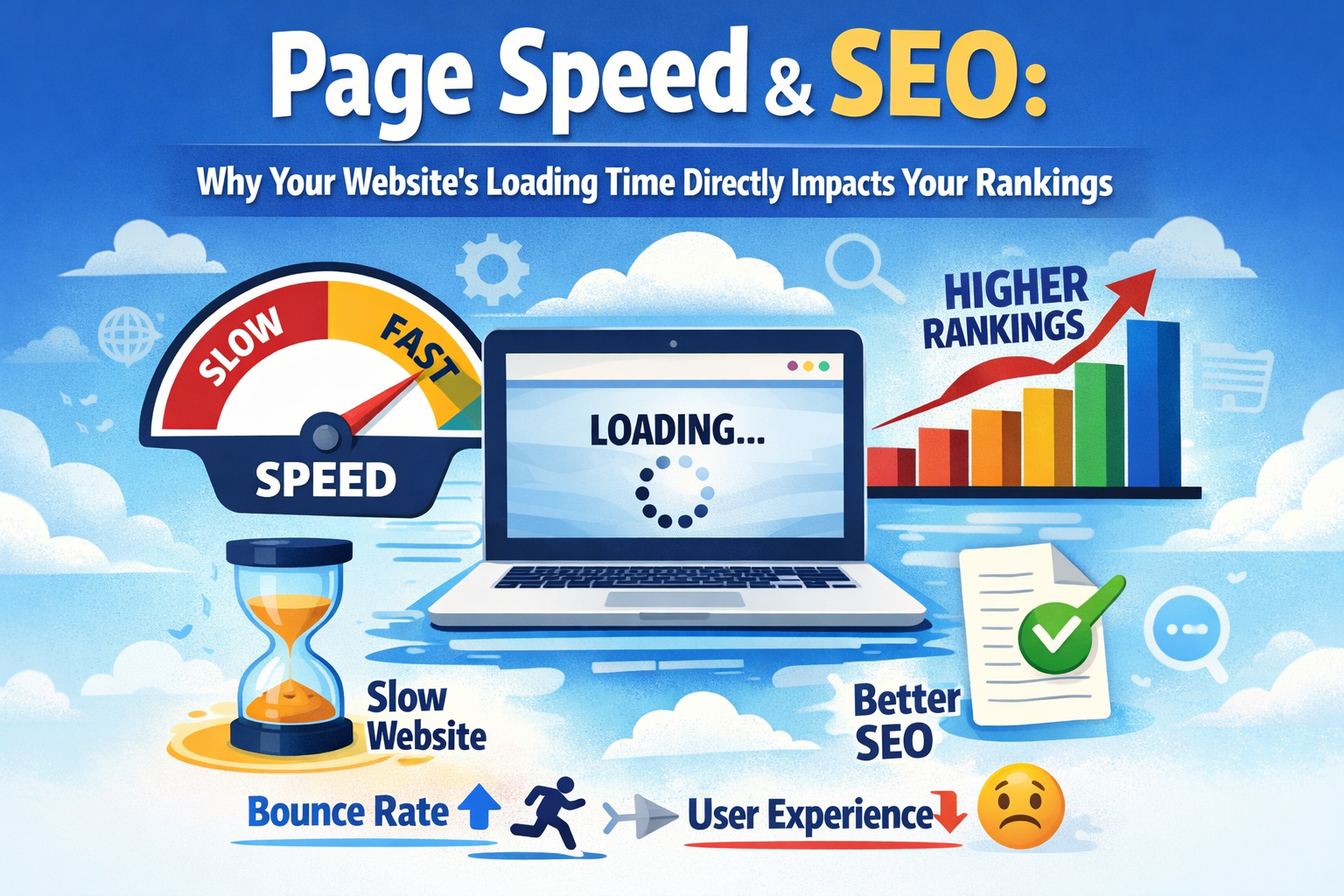
Google ranks fast websites higher. It's that simple.
If your website takes 5+ seconds to load, you're already losing to competitors. On mobile, where 60%+ of searches happen, you're losing even more.
What to do:
Optimise your images (biggest impact)
Enable caching
Set up a CDN
Minimize plugins
Upgrade hosting if needed
Test your speed with Google PageSpeed Insights
Read: [Page Speed and SEO: Why Your Website's Loading Time Directly Impacts Your Rankings]
Element 3: Help Google Understand Your Business (Schema Markup)
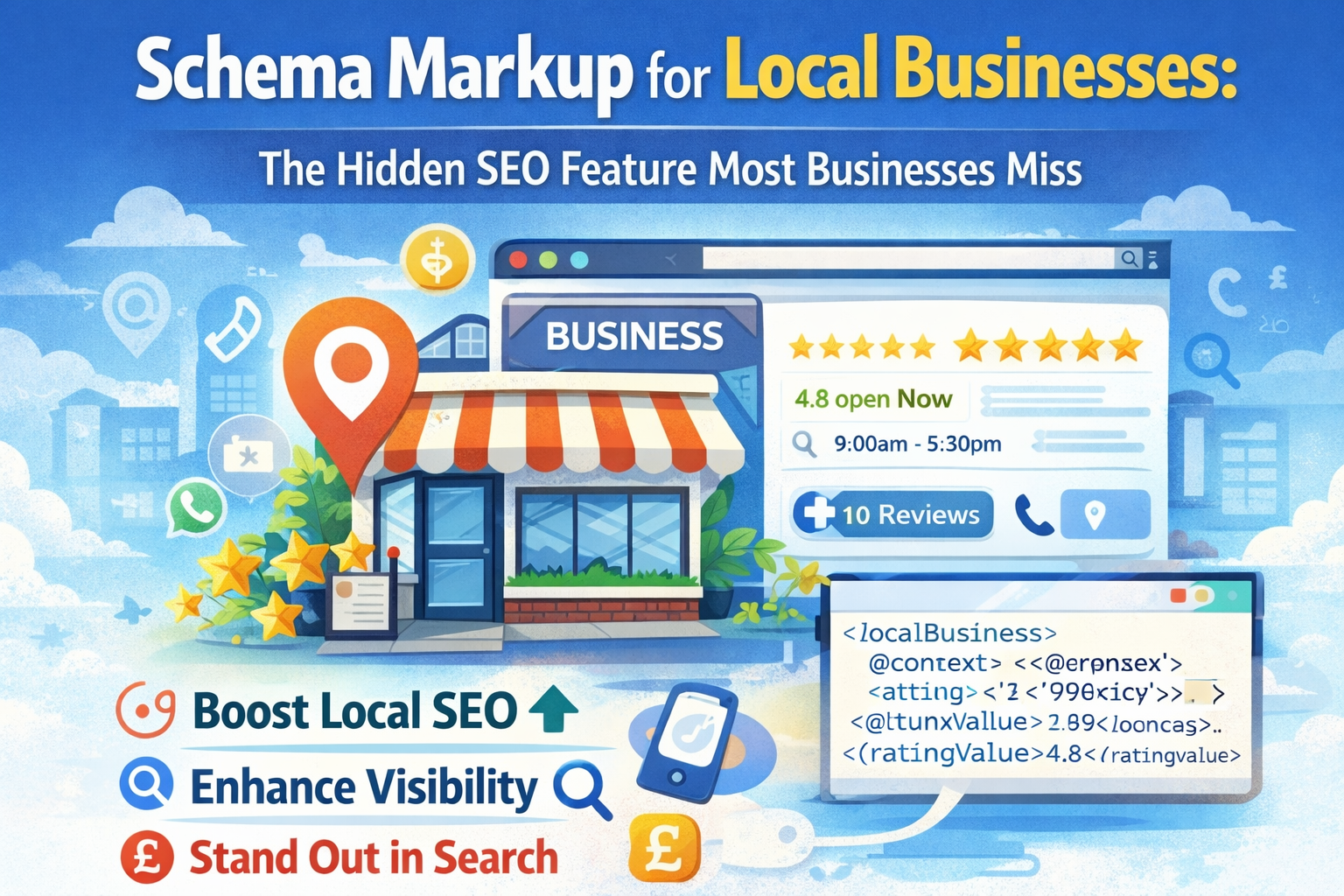
Schema markup is like a cheat sheet for Google. It tells Google exactly what your business is, where it's located, when you're open, and what people say about you.
Without schema, Google has to guess. With schema, Google knows.
What to do:
Add LocalBusiness schema to your homepage
Add review schema if you have reviews
Add your opening hours
Add your service area
Use plugins like Rank Math or Yoast to make it easy
Read: [Schema Markup for Local Businesses: The Hidden SEO Feature Most Businesses Miss]
Element 4: Optimise Your Website for Conversions
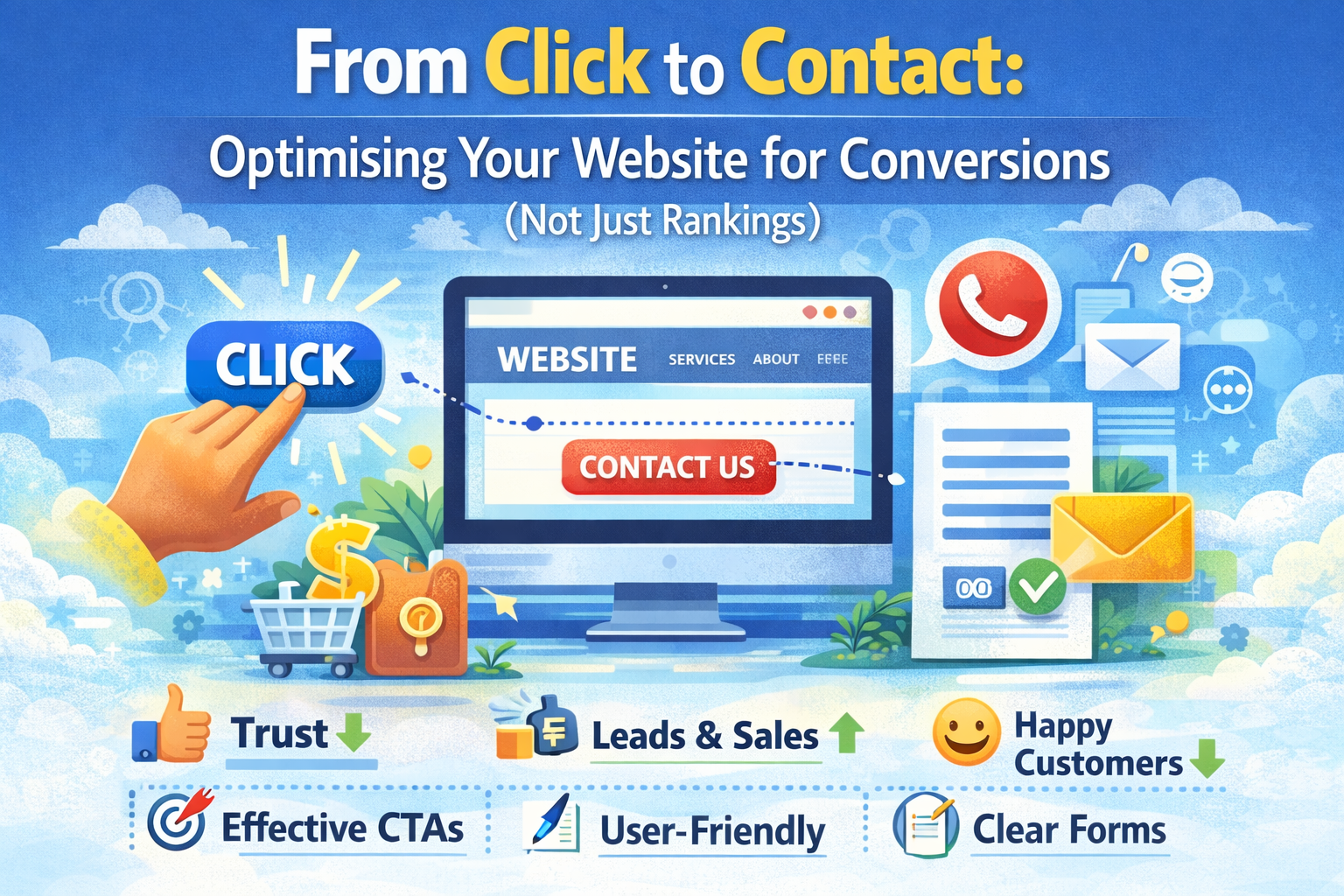
Here's the plot twist: SEO isn't about rankings. It's about customers.
You can rank #1 on Google, but if your website doesn't convert visitors into enquiries, it's pointless.
What to do:
Make your value proposition crystal clear
Have a strong call-to-action
Build trust with reviews and testimonials
Simplify your contact forms
Remove friction (slow load times, confusing design, hidden contact info)
Test and improve continuously
Read: [From Click to Contact: Optimising Your Website for Conversions (Not Just Rankings)]
Element 5: Build Your Foundation: Business Directories and Citations
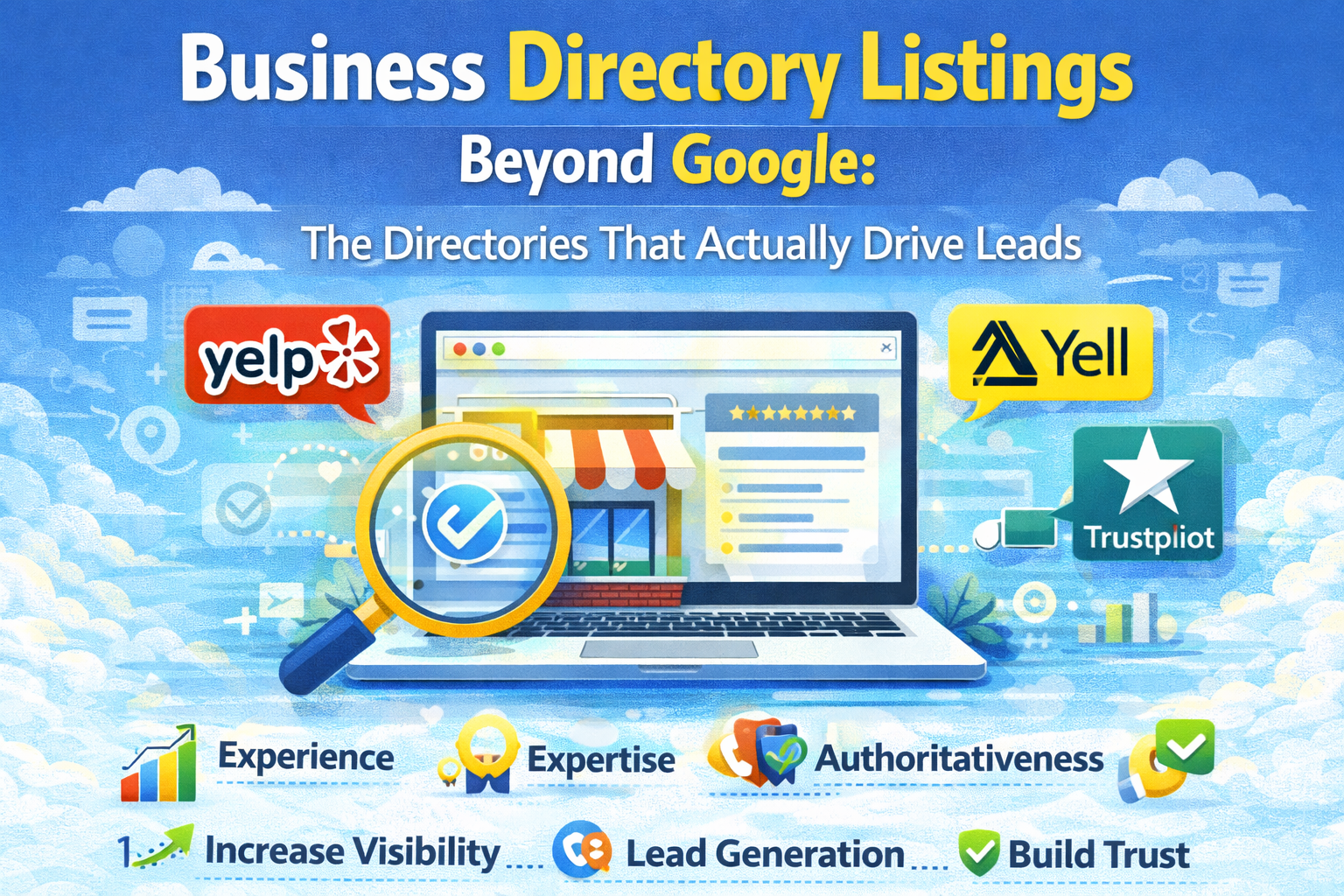
While you're working on Google, don't forget about the directories where customers are actively searching.
Directory listings are a goldmine. They drive direct traffic. They're free or cheap. And they help your Google rankings too.
What to do:
Claim your Google Business Profile
List on Trustpilot
Find industry-specific directories relevant to your business
Get on local directories (Yell, 192.com, etc.)
Make sure your information is consistent everywhere (NAP)
Encourage customers to leave reviews on directories
Read: [Business Directory Listings Beyond Google: The Directories That Actually Drive Leads]
Element 6: Create Content That Ranks and Converts
Now you've got the foundation. Time to build content that actually ranks.
Your content needs to be:
Relevant to what people are searching for
Better than what currently ranks
Optimized for the specific keyword
Actually helpful (not thin, low-quality fluff)
What to do:
Research keywords people are searching for
Create comprehensive, helpful content (1500-2000+ words)
Optimize for your target keyword
Structure your content clearly (headings, lists, bullet points)
Answer the questions people actually ask
Update old content to keep it fresh
Element 7: Get Internal Links to Distribute Authority
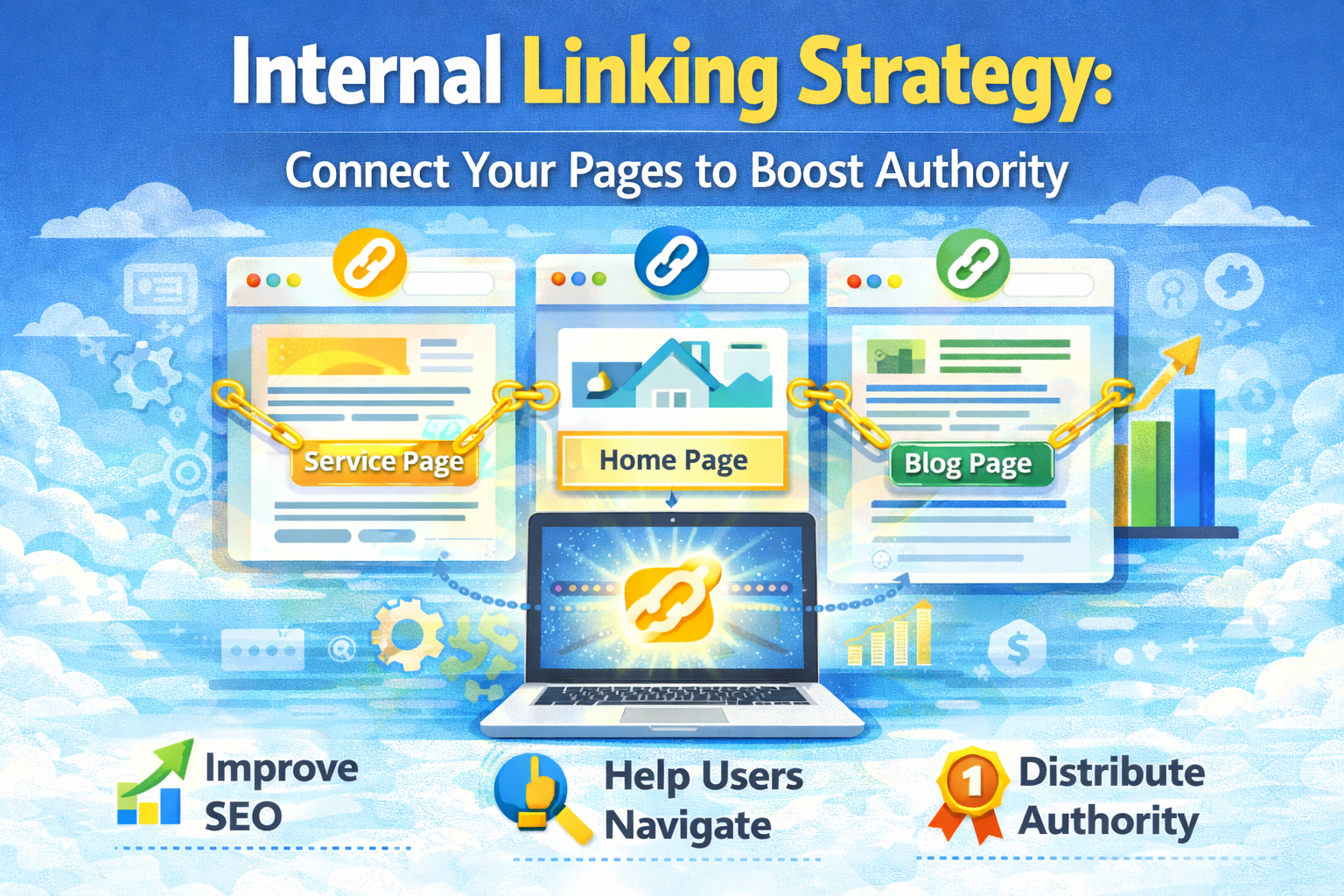
You probably think of links as external (from other websites). But your internal links are just as important.
Internal links tell Google which pages are most important. They distribute authority throughout your site. They help visitors navigate. They improve engagement.
What to do:
Map your content and identify "pillar" pages
Create topic clusters (cornerstone content + supporting pages)
Link from pillar pages to supporting pages
Use strategic anchor text
Link to new content from existing pages
Audit and update internal links quarterly
Read: [Internal Linking Strategy: Connect Your Pages to Boost Authority]
Element 8: Earn External Links and Authority
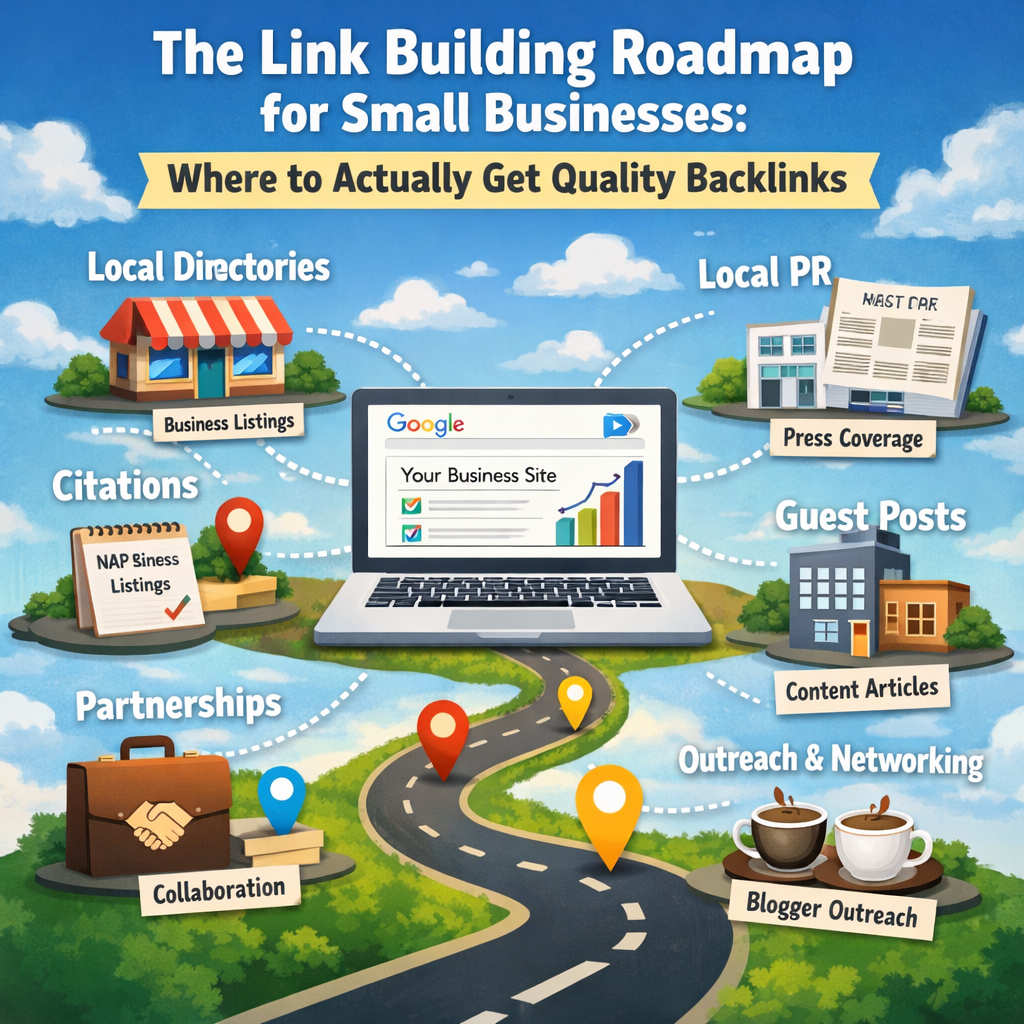
Internal links are great, but external backlinks are still a major ranking factor.
Quality backlinks from reputable websites tell Google: "This site is trustworthy and important."
What to do:
Get listed on industry directories
Get linked from local business sources
Pitch guest posts to relevant blogs
Build partnerships with complementary local businesses
Get featured in local news
Create link-worthy content (case studies, original research, comprehensive guides)
Read: [The Link Building Roadmap for Small Businesses: Where to Actually Get Quality Backlinks]
Element 9: Optimise for Special Ranking Opportunities (Featured Snippets)
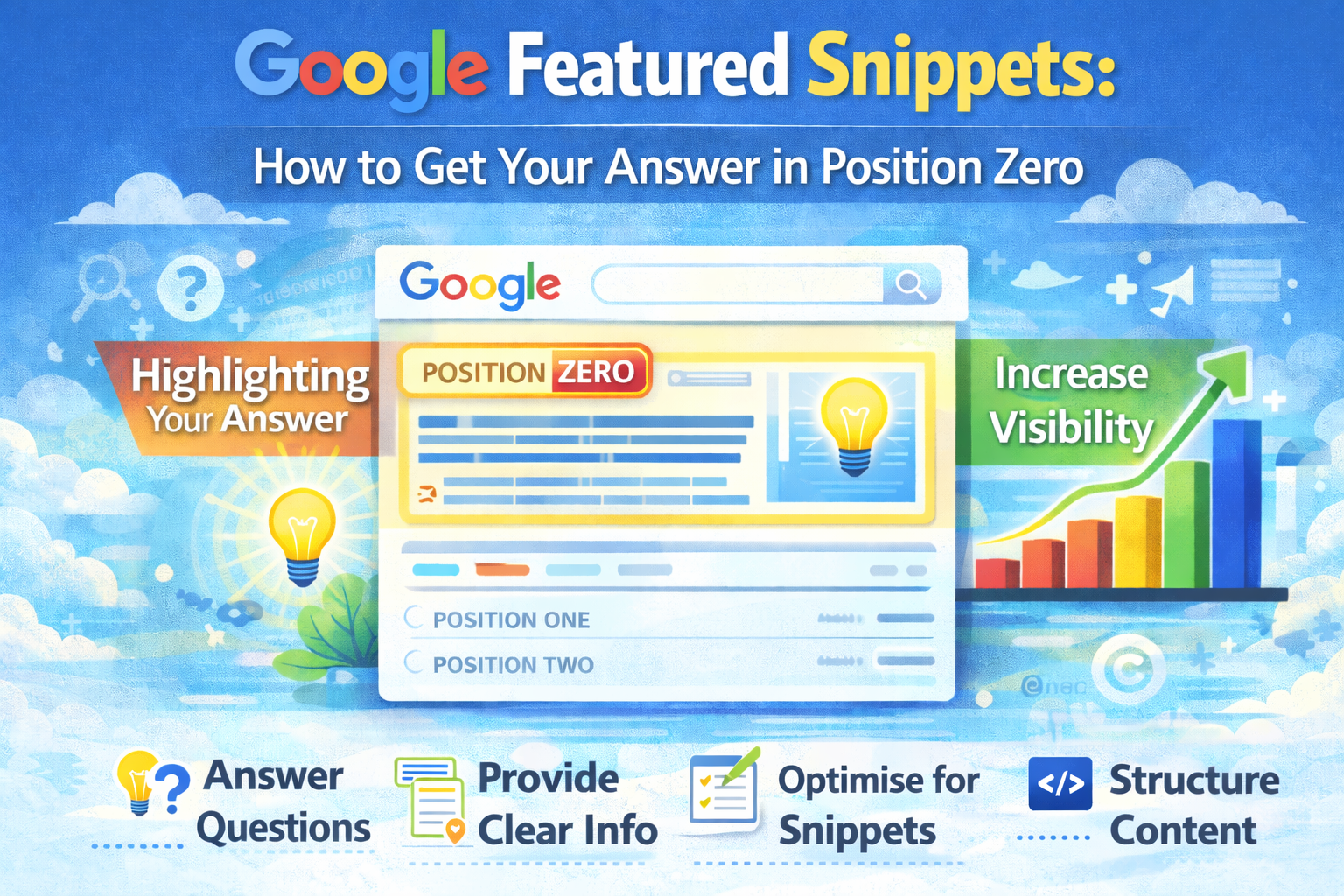
Not every keyword has a featured snippet. But some do. And when they do, the snippet gets more clicks than the #1 ranking.
This is an easy win if you know how to optimise for it.
What to do:
Find keywords where you rank on page 1 that have featured snippets
Write better answers than the current snippet
Format your answer clearly (paragraph, list, or table)
Make sure the answer directly addresses the question
Use schema markup to help Google understand your content
Read: [Google Featured Snippets: How to Get Your Answer in Position Zero]
Bonus: Analyse Your Competition
You don't have to invent SEO strategy from scratch. Study what's working for your competitors.
By understanding their strategy (keywords, backlinks, content, reviews), you can learn from their successes and avoid their mistakes.
What to do:
Identify your top 3 competitors
Check what keywords they rank for
Analyse their backlinks
Study their content strategy
Look at their Google reviews
Find gaps in your own strategy
Outrank them with better execution
Read: [Your Competitor's SEO Strategy: How to Reverse-Engineer Their Success]
How These Nine Elements Work Together
Here's the key insight: these nine elements aren't separate. They're interconnected.
Your E-E-A-T (element 1) helps your rankings for everything else.
Your page speed (element 2) improves user experience, which improves conversions.
Your schema markup (element 3) helps Google understand your content better, which helps it rank.
Your conversions (element 4) improve engagement metrics, which help your rankings.
Your directory listings (element 5) are citations that help your local rankings.
Your content (element 6) gives you something to get backlinks for.
Your internal links (element 7) distribute authority to that content.
Your external links (element 8) boost that authority even more.
Your featured snippets (element 9) are the cherry on top—bonus visibility.
When you do all nine things together, it's powerful. When you do only one or two, it's weak.
Your Implementation Roadmap
Don't try to do all nine at once. You'll overwhelm yourself and nothing will get done.
Instead, implement them in phases:
Phase 1: Foundation (Weeks 1-4)
Build E-E-A-T (update About page, get reviews)
Optimize page speed
Add schema markup
Improve conversions on your existing pages
Claim all your directory listings
Phase 2: Visibility (Weeks 5-12)
Create content (start with 4-5 strong pieces)
Optimize for featured snippets (if applicable)
Build internal links strategically
Encourage reviews on directories
Phase 3: Authority (Weeks 13+)
Build external backlinks
Create more content
Analyze competitors
Keep improving and testing
Real timeline: Most businesses see meaningful ranking improvements 3-6 months into this process. Real authority-building takes 6-12 months.
Don't expect overnight results. But if you follow this roadmap consistently, you will rank higher, get more traffic, and convert more customers.
Real-World Case Study: How It All Comes Together
Let's look at a real business that implemented all nine elements.
The Business: A local accounting firm in Leeds.
Starting Point (Month 1):
Not ranking for main keywords
Website was slow (4.2 seconds load time)
No reviews
No schema markup
Website had outdated design, confusing navigation
Only listed on 2 directories
15 pieces of old blog content (thin and outdated)
No internal linking strategy
No backlinks to speak of
5 organic enquiries per month
What They Did:
Phase 1 (Months 1-4):
Updated About page with team credentials and experience
Started asking customers for Google reviews
Optimised page speed (brought it down to 1.8 seconds)
Added schema markup
Improved homepage and service pages for conversions
Listed on 12 directories (Yell, Trustpilot, Chamber of Commerce, industry sites)
Phase 2 (Months 5-12):
Created 24 new blog posts targeting relevant keywords
Optimised 5 articles for featured snippets
Built internal linking structure with topic clusters
Continued collecting reviews (reached 67 reviews, 4.8 rating)
Updated old content
Phase 3 (Months 13-18):
Secured 8 backlinks from local business sources and industry directories
Guest posted on 3 relevant blogs
Got featured in local business magazine
Analysed competitors and filled content gaps
Continued refining
Results (18 months later):
Ranking #1 for "accountant Leeds"
Ranking #1 for 6 related keywords
Ranking in top 3 for 12 more keywords
Organic traffic up 340%
Enquiries from organic search: 5/month → 34/month
587% increase in leads
Domain authority increased from 18 to 37
They didn't do anything special. They just did all nine things consistently.
FAQ
Q: Do I need to do all nine elements? A: Not immediately. Start with elements 1-4 (foundation). Elements 5-9 build on that foundation. Ideally, yes, all nine matter. But start with the foundation.
Q: Which element is most important? A: Content (element 6) and E-E-A-T (element 1). Everything else supports those. But all nine working together is stronger than any one alone.
Q: How much will this cost? A: Most of it is free or costs just your time. You might spend: hosting ($10-30/month), schema plugin ($50-200/year), directory listings ($50-500/year). Total: maybe £150-1000/year if you invest a bit. Or completely free if you do it all yourself.
Q: How long will it take? A: Phase 1 (foundation): 4-6 weeks. Phase 2 (content and visibility): 8 weeks. Phase 3 (authority): ongoing. Real results: 3-6 months minimum. Significant results: 6-12 months.
Q: Should I hire an agency to do this? A: You can do most of this yourself if you have time. An agency will do it faster and better, but costs money. For a small business, starting with self-service (especially Phase 1) makes sense.
Q: Which element drives the most leads? A: For most small businesses: directory listings (element 5) drive immediate leads. Google rankings (everything combined) drive long-term leads. Conversions (element 4) determine how many of those leads actually become customers.
Q: Can I skip an element? A: You can, but you'll be leaving money on the table. Element 1 (E-E-A-T) and element 2 (page speed) shouldn't be skipped. The others you can prioritise based on your situation.
Q: Should I focus on one element at a time? A: Yes for Phase 1, but work on multiple elements in Phase 2+. You don't need to perfect element 1 before starting element 2. Do element 1 to 80% and move on.
Q: How do I know which content to create (element 6)? A: Research keywords your target customers are searching for. Check what your competitors are ranking for. Look for gaps. Create content that answers real questions and targets keywords with decent search volume.
Q: What if my competitors are already doing all nine? A: Then you outdo them. Do these nine better than they do. Better content. More reviews. Faster site. Better conversions. Out-execute them.
Q: Is this strategy different for different industries? A: The nine elements apply to any business. But the emphasis changes. E-commerce focuses more on conversion (element 4). Local businesses focus more on directories (element 5) and local links. YMYL (medical, legal, financial) needs stronger E-E-A-T (element 1).
Q: Can I do this while running my business? A: Honestly? It's hard. Most small business owners are too busy. That's why hiring help (at least for content creation and technical setup) is often worth it. You can outsource 80% and focus on the 20% that requires your expertise.
The Bottom Line
SEO isn't complicated if you understand the system.
You need:
Trust (E-E-A-T)
Speed and technical excellence (page speed, schema)
Conversions (turning visitors into customers)
Visibility (directories, content, backlinks)
Authority (internal and external links)
Opportunities (featured snippets, featured searches)
Do all nine consistently, and you'll rank higher.
It won't happen overnight. But if you follow this roadmap, you'll see results within 3-6 months, and significant results within 6-12 months.
The question isn't "Can I rank higher on Google?" The answer is yes, absolutely.
The real question is: "Am I willing to do the work consistently?"
If you are, you will win.
Ready to build your complete SEO strategy?
We'll audit your current situation, identify which of the nine elements need the most work, and build a specific roadmap tailored to your business. Most clients see meaningful ranking improvements within 3 months, and major improvements within 6-12 months.
No guesswork. No "hope and see" approach. Just a clear system based on what actually works.
You can also get in touch directly if you'd prefer email or phone.